


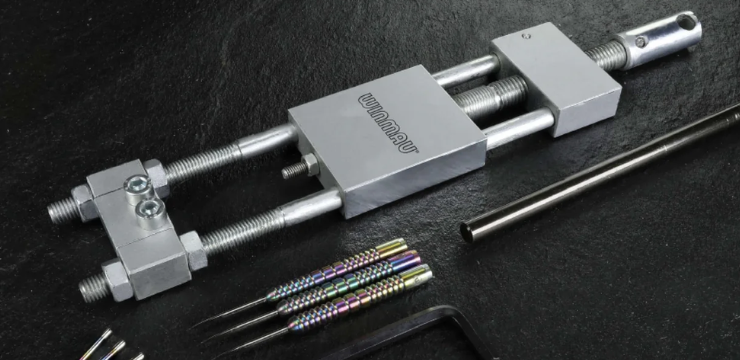
In the video above, Gav hands things over to Adam to show just how simple it is to repoint your own darts using the Winmau Craftsman Repointing System. If you’ve always relied on a mate, a shop, or a pro to swap your points, this guide walks you through the full process—from clamping the dart, removing the old point and pressing in a new one, to a few real-world tips so you don’t damage your barrels.
Before you start (read this bit!)
Repointing is straightforward, but you are putting a lot of force through metal parts, so a bit of prep and care goes a long way:
-
Work on a solid surface
A sturdy table or workbench is best. Avoid wobbly desks or soft surfaces. -
Good lighting
You want to clearly see the gap between the nose of the barrel and the jig, and how far the new point has been pressed in. -
Mind your fingers
Keep fingertips away from the moving bar and the clamping area while you’re turning the handle. -
Tools & spares
-
Winmau Craftsman repointing tool
-
Supplied Allen key
-
Your new points (e.g. standard, grooved, specialist)
Optional but useful: a small cloth to protect the table and somewhere safe to drop old points.
-
-
Know your target point length
Most modern players use 36–40 mm points rather than the shorter stock points that come on many sets. The Craftsman lets you set that depth consistently.
What’s in the box
The kit includes:
-
Winmau Craftsman Repointing Body
Solid metal block with:-
Threaded back section to screw your dart barrel into
-
Front clamp with two bolts and a shaped groove to hold the point
-
-
Operating Bar / Handle
Slips through the main threaded rod so you can wind the mechanism in and out with very little effort. -
Allen Key
For tightening the clamp bolts. -
Spare clamp bolts
In case you ever strip or lose one.
There are also printed step-by-step instructions in the box—worth a quick read the first time, even if you “never read manuals”.
How the Craftsman works
-
The back of the jig holds the barrel by its thread (like screwing in a stem).
-
The front clamp grips the point in a shaped groove between two bolts.
-
Turning the main screw with the bar:
-
One way pushes the barrel off the point (removing the old one).
-
The other way presses the barrel onto a new point to the depth you’ve set.
-
Because it’s all threaded and guided, it feels smooth and controlled—no hammering, no vices, no brute force.
Step 1 – Removing your old point
-
Open the front clamp
-
Loosen the two front bolts with the Allen key so the point groove is clear.
-
-
Screw in the barrel
-
Thread your dart barrel into the back of the Craftsman, just like screwing in a shaft.
-
Make sure it’s snug but don’t overtighten.
-
-
Seat the old point in the groove
-
Lay the existing point into the shaped groove between the two clamp bolts.
-
Tighten those bolts back down firmly with the Allen key so the point is held securely.
-
-
Insert the operating bar
-
Slide the bar through the hole in the main threaded section.
-
-
Wind anti-clockwise to remove the point
-
Turn the bar anti-clockwise, steadily.
-
The mechanism will push the barrel back off the point.
-
As Adam shows, on this tool it’s surprisingly smooth—no huge effort needed.
-
-
Finish & release
-
Once the point is free, unscrew the barrel from the jig.
-
Remove the old point from the clamp and set it aside safely.
-
Repeat for darts two and three.
Step 2 – Fitting a new point
-
Place the new point in the clamp
-
Open the front bolts slightly.
-
Lay the new point in the same groove.
-
Position it so there’s a small visible gap (around 5–7 mm) between the nose of where the barrel will sit and the clamp—this is the “pressing distance” you’ll close up.
-
-
Tighten the clamp
-
Use the Allen key to snug the bolts down on the new point.
-
It must be tight so the point doesn’t slide as you press the barrel on.
-
-
Screw the barrel back into the jig
-
Thread the barrel into the back of the Craftsman again.
-
Screw it in until the nose is close to the clamp, with that small gap still visible.
-
-
Insert the bar and wind clockwise
-
Slide in the operating bar.
-
Turn clockwise this time to push the barrel onto the new point.
-
Go slowly; you’ll feel resistance build as the point seats into the barrel.
-
-
Watch the gap
-
Your goal is to close that 5–7 mm gap without going beyond it.
-
Over-pressing can stretch or “bell out” the nose of the barrel—Adam and Gav mention this as a common mistake.
-
-
Release and inspect
-
Once the gap has closed and the point feels solid, back the mechanism off, loosen the clamp and remove the dart.
-
Check:
-
Point is straight
-
Length is what you wanted
-
No visible deformation at the nose
-
-
If everything looks good, repeat for the remaining darts.
Tips to avoid barrel damage
There are a few important real-world points:
-
Don’t over-crank it
Once that pre-set gap has closed, stop. Forcing it further can stretch the front of the barrel. -
Use the clamp correctly
The front groove is designed to spread the pressure evenly along the point. Tighten both bolts evenly so it grips without biting in one spot. -
Grooved points are more fragile
As Adam mentions, grooved/etched points have weak spots and are more prone to snapping. The Craftsman will still remove them, but be gentle when they’re near the end of their life. -
Loose points in play
They tell a great story about a player whose point stayed in the board while the dart came back without it. If you ever get chronic loosening, some players use a tiny amount of high-temp glue on the point shank—but always sparingly and at your own risk.
Troubleshooting & real-world notes
-
The point won’t budge
-
Double-check the barrel is fully screwed in.
-
Make sure the point is clamped tightly.
-
Apply steady, continuous pressure—not fast, jerky turns.
-
-
Point slips while pressing in
-
Clamp bolts may not be tight enough.
-
Remove, reposition the point and re-tighten both bolts firmly.
-
-
Barrel looks slightly flared
-
You’ve pressed too far. Stop immediately and don’t try to “fix” it by forcing more.
-
In future, use a slightly larger starting gap and stop the moment it closes.
-
-
Different point styles
-
Tapered points (like some specialist profiles) make it easier to judge depth visually—once the taper meets the barrel, you’re there.
-
For totally straight points, rely on your measured gap and be consistent.
-
Quick Start Checklist
Before you begin:
-
Craftsman tool, bar and Allen key ready
-
New points laid out
-
Solid table / bench and good lighting
For each dart – removal:
-
Loosen front clamp bolts
-
Screw barrel into back of jig
-
Seat old point in the front groove and clamp tight
-
Insert bar and turn anti-clockwise until the point pops free
-
Unscrew barrel and remove old point
For each dart – refitting:
-
-
-
Place new point in front groove and clamp firmly
-
Screw barrel into jig leaving roughly 5–7 mm gap at the nose
-
Insert bar and turn clockwise until the gap closes
-
Release, inspect point length and barrel nose
-
Repeat for the remaining darts
-
-

Everything for your next throw
Move from reading to finding, buying, comparing and playing without leaving the connected DRTV platform.
 READY
CHECK FIT
DARTS IQFind your perfect setup
Use your throw profile to discover darts that fit the way you actually play.
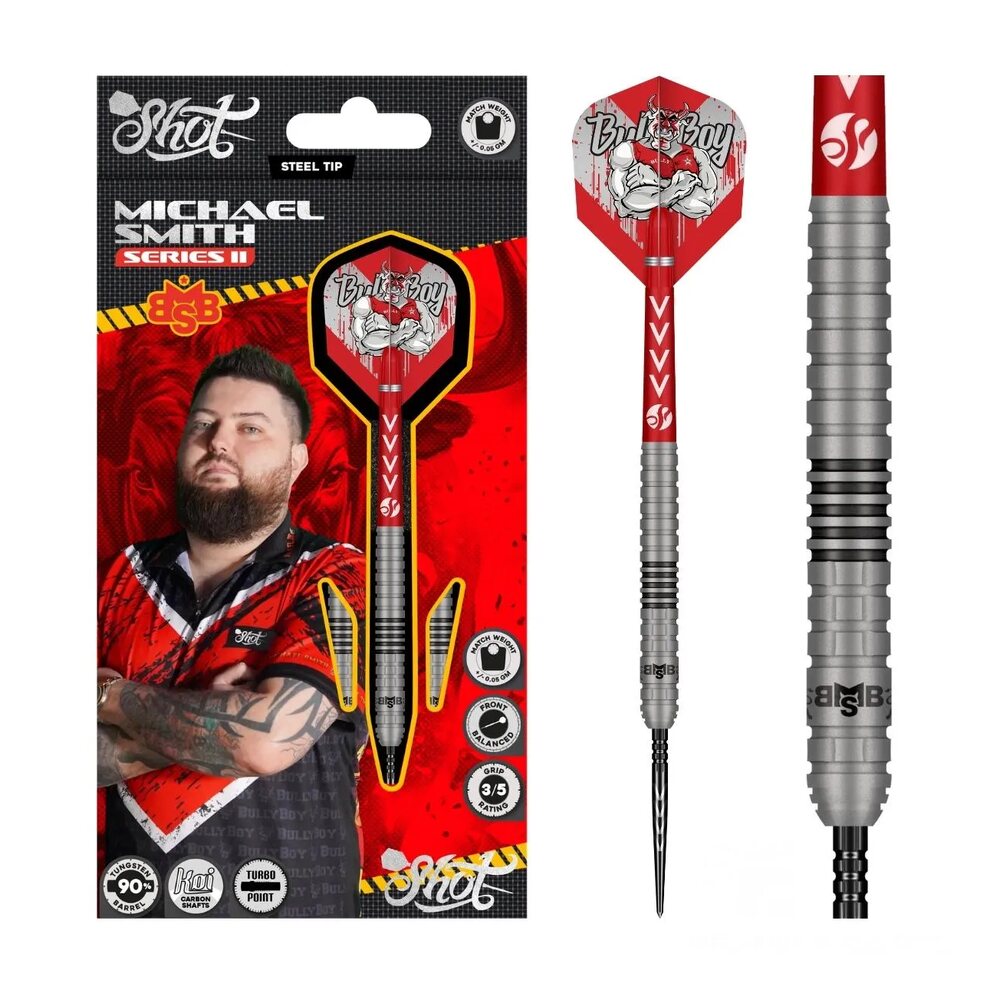
START DARTS IQ Winmau Apocalypse Brass Darts Steel Tip Darts versus Winmau Rebecca Allen 90% Tungsten Steel Tip Darts DARTS BATTLEWho wins this battle?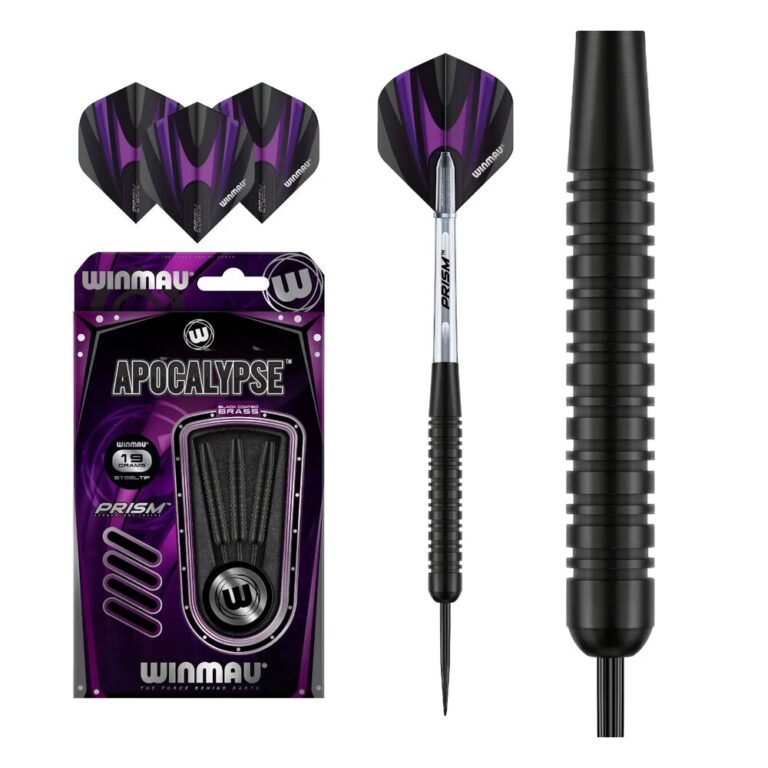

Two real darts. One head-to-head. Pick your winner.
PICK YOUR WINNER MARKETPLACEWinmau Blade 360 Triple Core Dartboard – Official PDC Match Quality
A live pick from the DRTV Marketplace, selected by Shop and backed by the DRTV Database.
EXPLORE MARKETPLACE






Join the conversation
Write a comment+