


In the video above Max and Gav walk through five simple darts hacks you can build from stuff you’ve already got lying around – no fancy gadgets, no big spend. This companion guide pulls all of those ideas into one place so you can copy them at home and tweak them for your own setup.
Before we dive into the individual tips, quick word on the vibe: this is all about low-cost, low-stress improvements. None of these require tools beyond scissors and tape, and if something gets wrecked, you just make another one in five minutes. Treat it as “craft club for dart nerds”.
What you’ll need (household bits)
You don’t need everything for every tip, but here’s the full list Max uses:
-
A4 paper
-
Pen or marker
-
Sellotape / clear tape
-
Scissors
-
Kitchen roll or toilet roll tube
-
Old card (playing card, Uno card, loyalty card, etc.)
-
Small cable ties (the type that come wrapped round new electrical plugs)
-
Straight edge (book, chopping board, box)
-
Flexible phone arm / clamp or bendy phone holder (optional but handy)
-
Smartphone (your main one or an old handset)
Tip 1 – DIY Sight Line (stance + alignment)

Max’s first hack is a homemade “sight line” – basically the same concept as the commercial ones you see online for £15–£25, but made from a single sheet of paper.
How to make the sight line
-
Take an A4 sheet and fold it in half lengthways (long edge to long edge) to create a centre crease.
-
Open it up and place it on a flat surface.
-
Using your straight edge, draw a straight line down the middle of the bottom half, following the crease.
-
Flip the paper over and draw a second straight line out from the centre so the line continues when rolled.
-
Roll the paper into a tube so those two lines line up perfectly to form one continuous line.
-
Once aligned, tape along the join so the tube holds its shape.
You now have a white tube with a continuous dark line running all the way around.
How to use it
-
Lay the tube on the floor and visually line the centre of the board (bullseye) up with the line on the tube.
-
Run it from directly under the bull, straight back through the oche.
-
Stand at the oche:
-
When you’re perfectly square to the board, the line will look straight and continuous.
-
If you drift left or right, the line “breaks” or kinks from your view.
-
Use this as a visual guide to get your feet, hips and shoulders lined up on the shortest path to the target before you start throwing.
Tip 2 – Tube Phone Holder (emergency camera stand)

If your proper phone holder breaks (or you’ve never bought one), a cardboard tube will get you out of trouble for online games or recording practice.
How to make it
-
Take a toilet roll or kitchen roll tube.
-
Cut it in half so you have two shorter tubes of roughly equal height.
-
On each half, make a vertical cut down one side, a few centimetres long.
-
From that cut, snip two small “flaps” – one on each side – so the top edge can fold inwards.
-
Fold the flaps inside the tube; these become supports for the bottom of your phone.
-
Optionally, slice the base of the tube at a slight angle so the phone tilts back a bit for a better viewing angle.
How to use it
-
Place both halves on a chair, shelf or table, spaced to roughly the width of your phone.
-
Rest the phone across the folded flaps so it sits snugly between the two tubes.
-
Angle the tubes so the phone points at your dartboard (for online darts) or at you (for selfie/throw analysis).
It’s not glamorous, but for a league night on webcam or a last-minute practice, it holds your phone steady enough to do the job.
Tip 3 – DIY Practice Rings (cable tie targets)
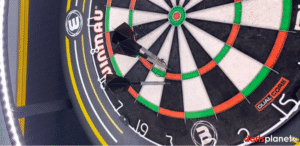
Instead of buying plastic practice rings, Max uses the cable ties that come wrapped around new plugs and cables.
How to make them
-
Take a small cable tie.
-
Loop it around and feed the tail through the locking head to form a circle.
-
Pull gently until you get a neat ring – don’t over-tighten; you want it roughly the size of a treble or bull.
-
Bend the little “tail” upwards so it sticks out like a peg.
You now have a ring with a built-in spike.
How to use them
-
At the board, push the tail gently into the sisal so the ring sits flat against the surface.
-
Position it around any segment you want to work on: treble 20, double tops, bull, awkward doubles, etc.
-
Throw your usual practice routines, but try to land every dart inside the ring.
It’s a cheap, adjustable way to force you to tighten your accuracy on specific hot spots.
Tip 4 – Card Grouping Target (tighten your spread)
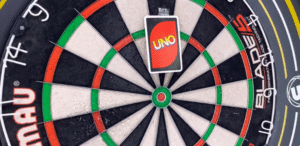
For grouping work, Max uses a simple playing card or Uno card as a scalable target.
How to set it up
-
Take an old card you don’t mind putting holes in.
-
Tear off a small strip of tape.
-
Tape the card to the board over a safe area – for example, between segments or over a number you’re not using in the current drill.
You now have a big, clear rectangle to aim at.
How to practise with it
-
Start with the full card: your aim is to get all three darts to land in the card area.
-
Once you can hit the full card regularly, switch to a smaller target:
-
Cut the card in half (or use a smaller loyalty card).
-
Eventually progress to a postage-stamp-sized piece.
-
-
The goal is not to hit a particular score, but to group all three darts into a smaller and smaller area.
This is brilliant for players whose grouping is loose – it turns every throw into a “can I get all three in the box?” mini-challenge.
Tip 5 – Phone + Clamp as a Portable Board Light

Max’s final hack uses a bendy phone arm or clamp plus your smartphone as a light, not a camera – perfect if you’re in a shed, garage, or somewhere with poor lighting.
What you need
-
A flexible phone holder / clamp / gooseneck
-
A smartphone with a torch/flashlight function
How to set it up
-
Clamp the flexible arm to a chair, table, shelf, or even directly to your dart stand.
-
Mount your phone in the holder.
-
Turn on the phone torch/flashlight.
-
Bend and position the arm so the beam spreads evenly over the dartboard without blinding you at the oche.
Max also shows a low-tech version where you simply rest the phone in a tube holder (from Tip 2) on a chair or shelf, torch on and pointed at the board.
When it’s useful
-
Practising in a shed/garage with no mains light.
-
Power cuts / late-night sessions where the main room light isn’t great.
-
Quick temporary setups at a friend’s house.
It’s obviously not a permanent lighting solution, but it will comfortably get you through a casual match or a practice session when you’d otherwise be throwing in the dark.
Quick-reference summary
Max’s 5 Money-Saving Darts Tips
-
DIY sight line: rolled A4 tube with a drawn line to check you’re standing dead-centre on the oche.
-
Tube phone holder: cut and folded toilet/kitchen roll tube to hold your phone for filming or online play.
-
Cable-tie practice rings: looped cable ties pushed into the board to create cheap aiming rings around key segments.
-
Card grouping target: taped playing card/Uno card that you progressively shrink to train tighter grouping.
-
Phone + flexible arm as light: use your phone torch on a bendy clamp or tube holder as a temporary dartboard light when you’ve got no electrics.
All five are basically “zero-cost” hacks built from stuff most players already own – ideal for juniors, new players, or anyone trying to stretch their darts budget without missing out on useful training aids.

Everything for your next throw
Move from reading to finding, buying, comparing and playing without leaving the connected DRTV platform.
 READY
CHECK FIT
DARTS IQFind your perfect setup
Use your throw profile to discover darts that fit the way you actually play.
START DARTS IQ Red Dragon Bullhitters V1 90% Tungsten Steel Tip Darts versus Shot Michael Smith Tenacious 90% Soft Tip Darts DARTS BATTLEWho wins this battle?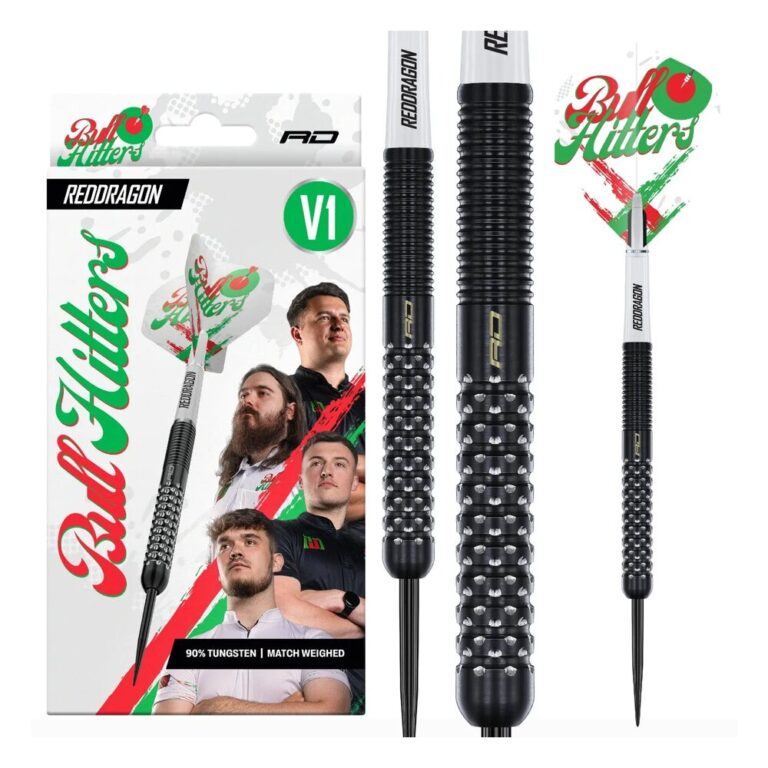
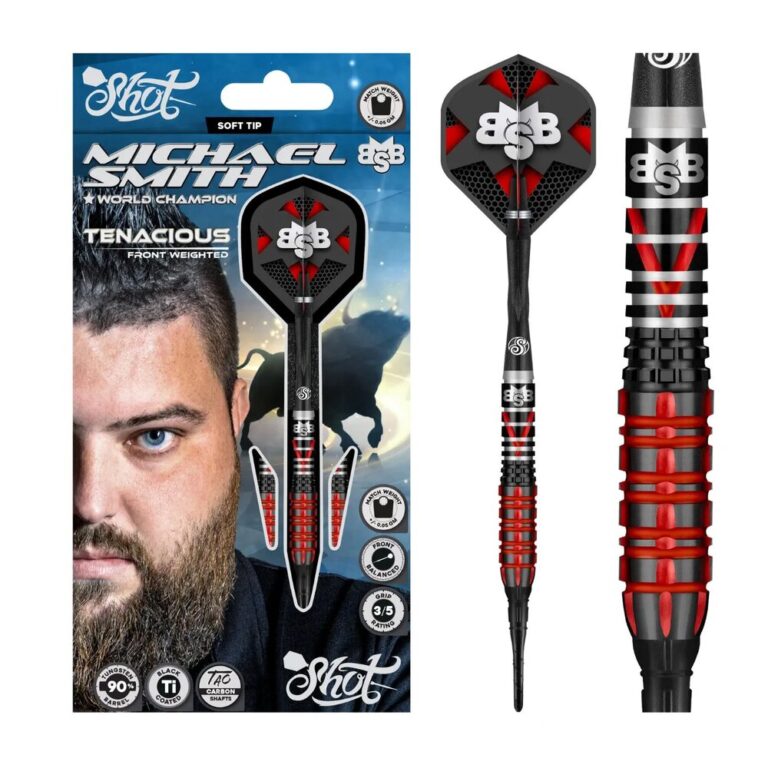
Two real darts. One head-to-head. Pick your winner.
PICK YOUR WINNER MARKETPLACEWinmau Blade 360 Triple Core Dartboard – Official PDC Match Quality
A live pick from the DRTV Marketplace, selected by Shop and backed by the DRTV Database.
EXPLORE MARKETPLACE






Join the conversation
Write a comment+